Murray, UT
Solar for Murray Homes, With Every Material Explained
We install solar panels and battery storage for homeowners in Murray, Sandy, Millcreek and nearby. Before you decide, we show you the panels, inverters and batteries that fit your home, what each one costs you over time, and why we'd pick one over another. Add-ons and panel repair are part of what we do too.
- Licensed in all states served
- 25-year warranty on solar and batteries
- $0 up front
- Free quote by phone
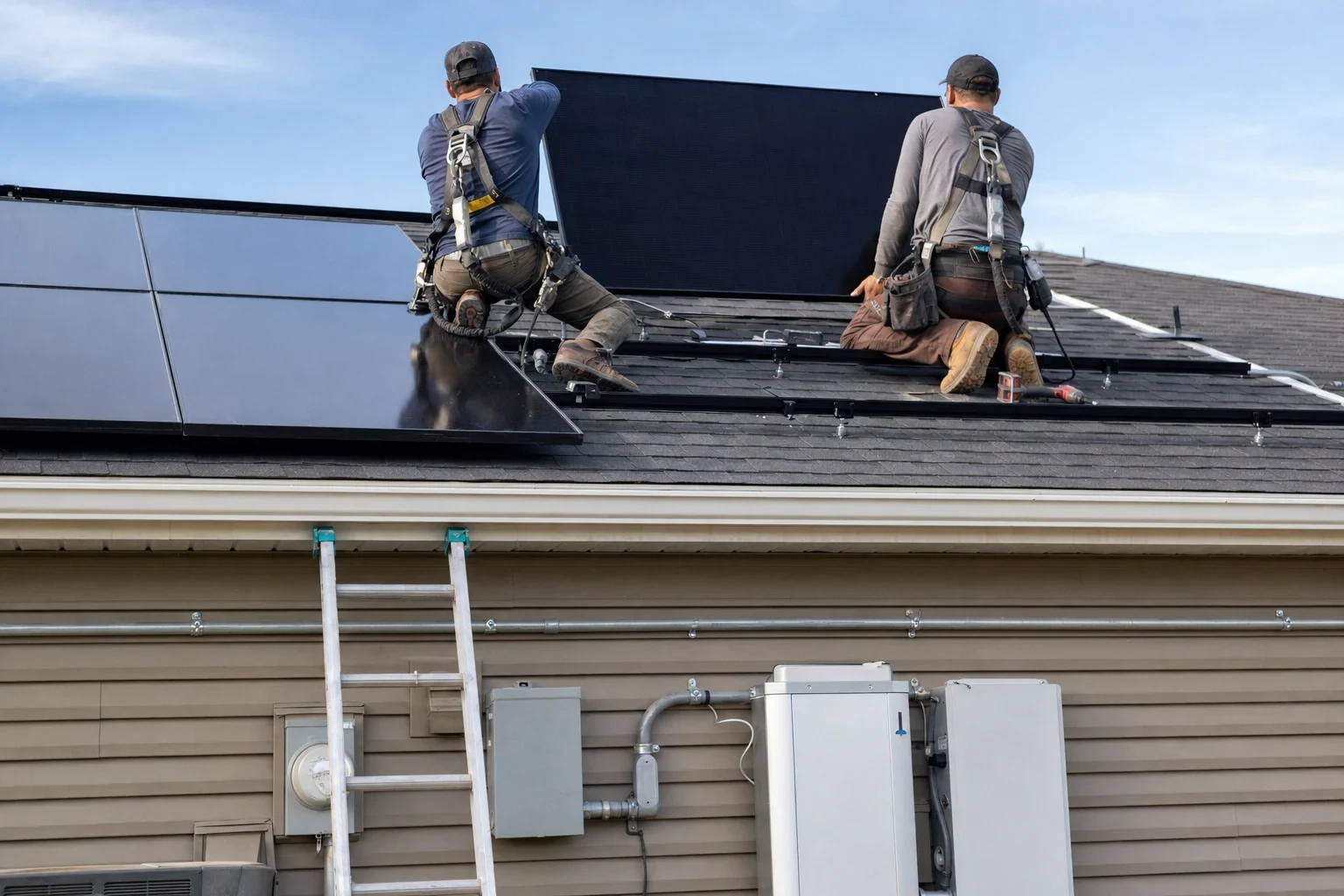
What Moves the Price of Solar
No two solar quotes come out the same, because no two families use power the same way. These are the pieces that change your number the most. We go over each one on the phone, then list them again in your written quote.
Your quote is free and we build it after looking at your bills and your property. With $0 up front, you won't face a large payment on day one.
- Your yearly power use
- The kilowatt-hours you use in a year set the size of the system. A house with central air and an electric car needs a lot more panels than a small home that heats with gas.
- Which panels you pick
- High-efficiency monocrystalline panels put out more power per square foot, and each one costs more. If your property has room to spare, a cheaper panel can carry the same load with a few more modules.
- How the inverter is set up
- A single central inverter is the lower-cost setup. Microinverters or power optimizers add to the bill, but each panel then works on its own. Shade on one module won't drag the rest down, and you can check every panel's output separately.
- Adding a battery
- Storage is often the largest single change in price. How big a battery you need depends on which circuits you want powered in an outage and how much daytime power you want to hold for the evening.
- Your electrical panel and wire runs
- Some older electrical panels have to be upgraded before they can safely take solar. A long distance between the array and your panel also means more wire, more conduit and more labor.
- Permits and utility sign-off
- Every job needs a city permit, an inspection and interconnection approval from the utility. Fees and paperwork vary a bit between cities, and we handle all of it for you.
What We Do for Your Home
Most of our work is solar panel installation and battery storage. We also handle solar system add-ons like EV chargers and energy monitoring, plus solar panel repair when a part stops pulling its weight. Each service page walks through the parts involved and what they mean for your bill.
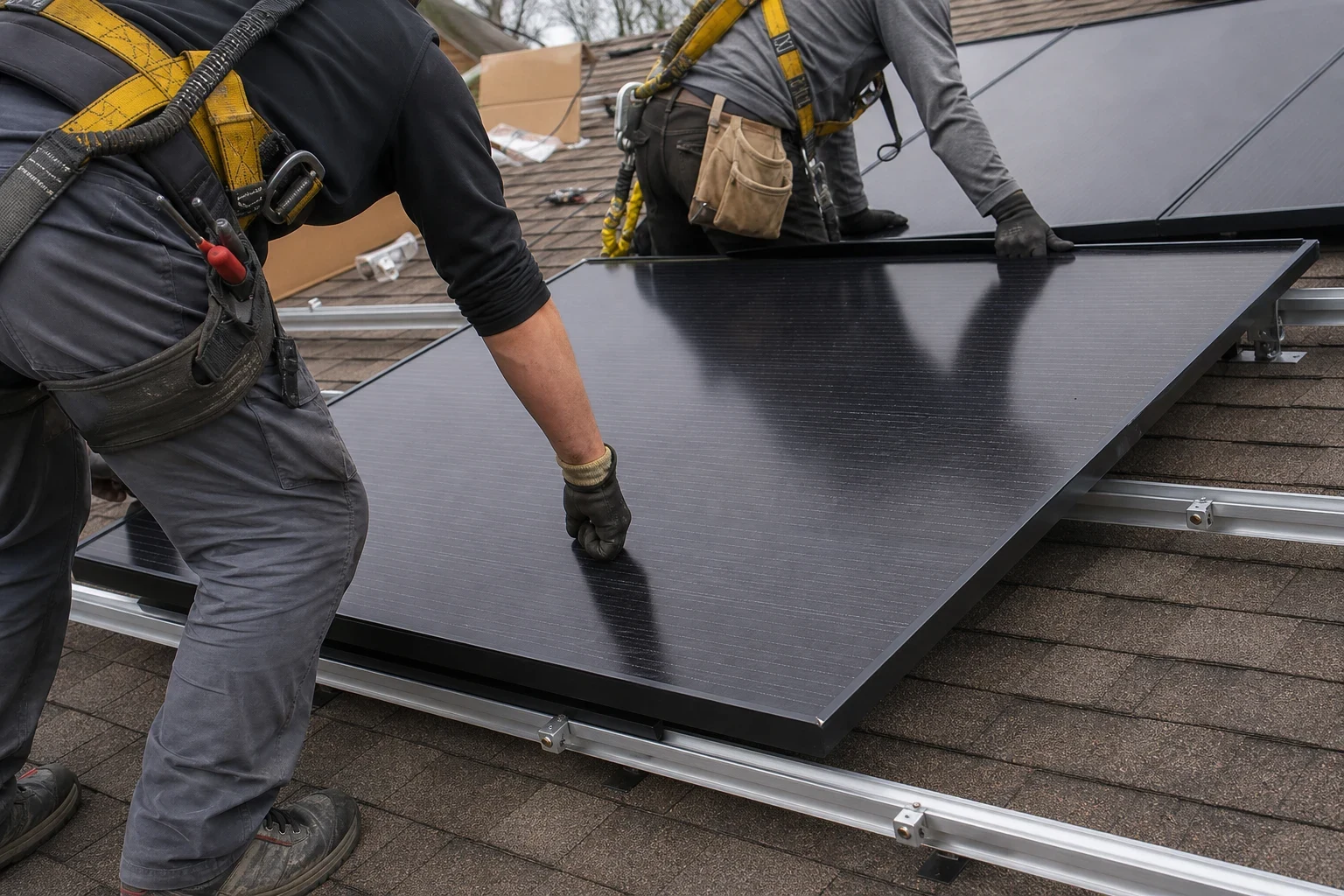
Solar Panel Installation
Panels mounted on your shingle or metal roof, with the panel, racking and inverter choices laid out in plain words before any work starts.
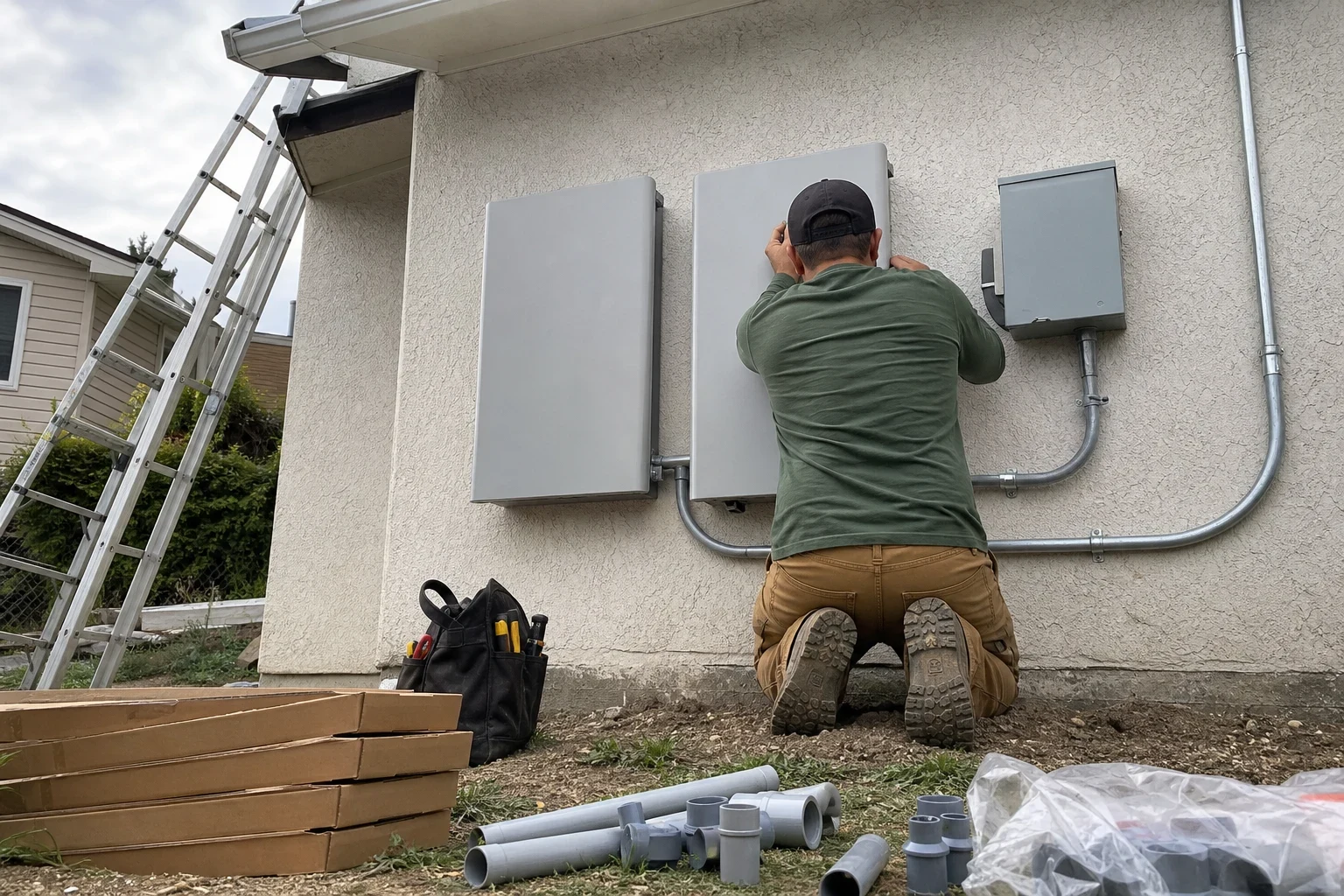
Battery Storage
Store the solar power your panels make during the day, keep key circuits running in an outage, and pick a battery type that handles a cold garage.
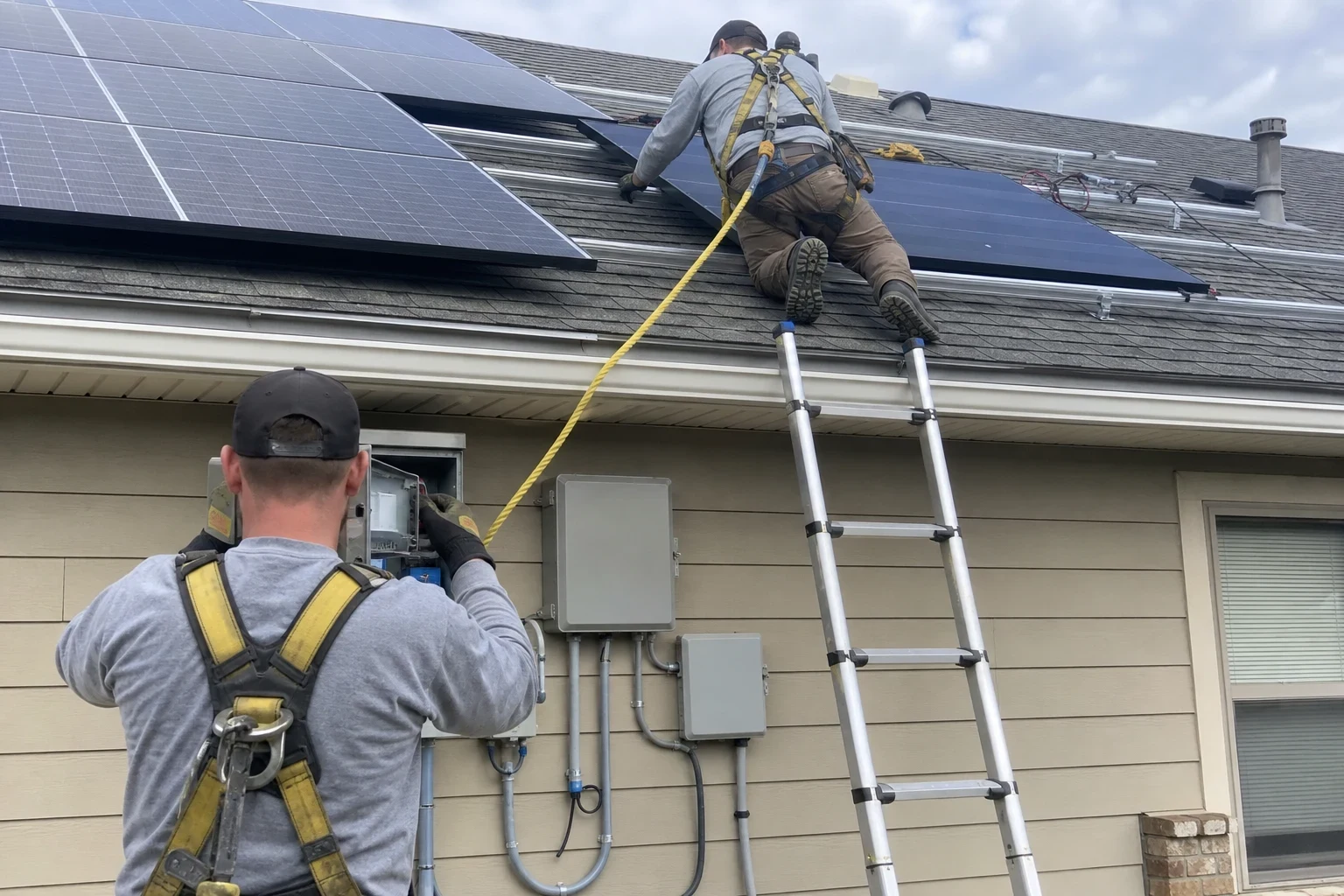
Solar System Add-Ons
Grow the solar you already have with extra panels, an EV charger or energy monitoring, matched to your existing inverter and wiring.
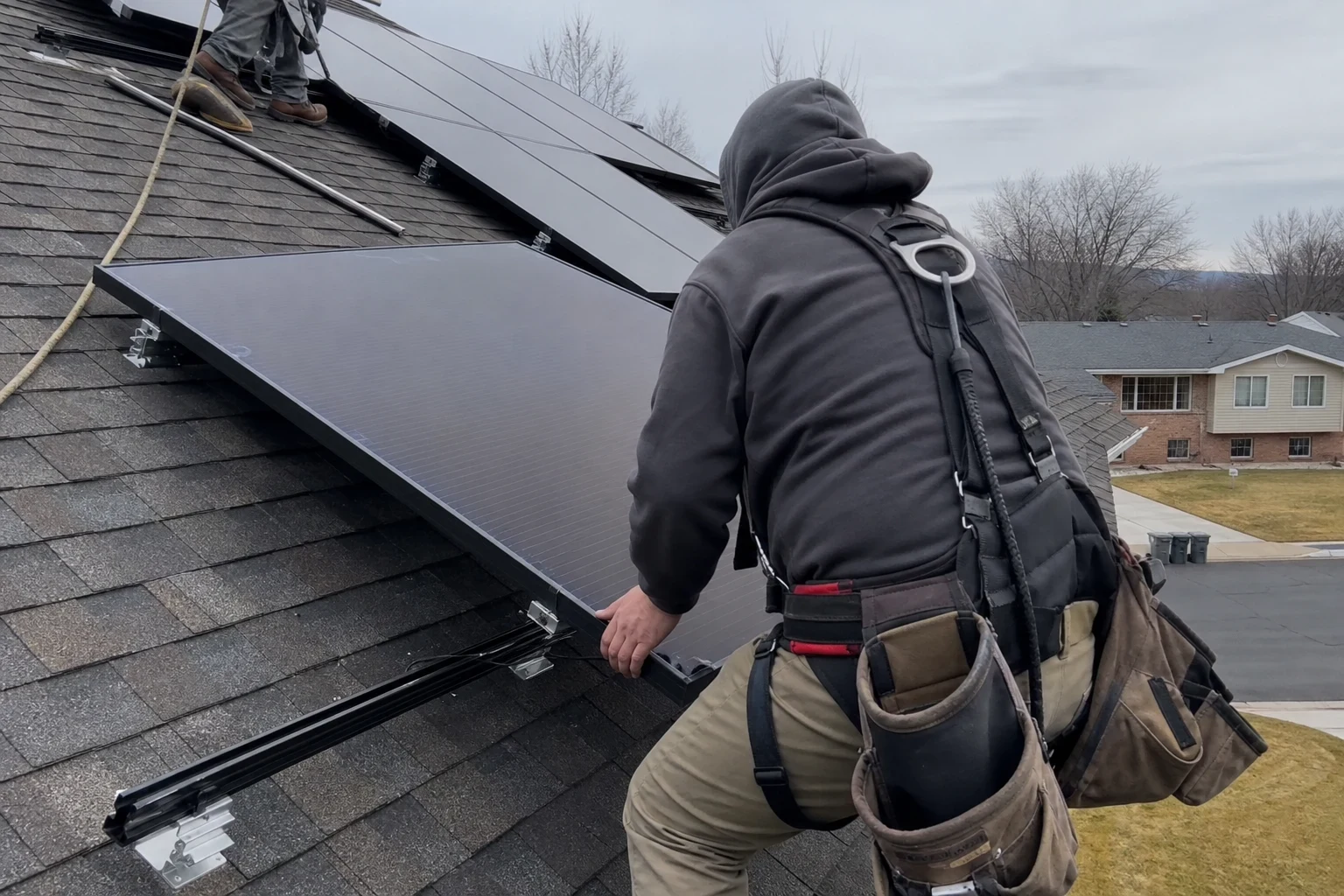
Solar Panel Repair
We track down why your system is underperforming, from cracked glass to a worn connector or a tired inverter, and tell you plainly what the fix involves.
Where We Install Solar
We're based in Murray and work on homes throughout the middle of the Salt Lake Valley. That includes Sandy, Midvale, Cottonwood Heights, Holladay, Millcreek and Taylorsville. We also take jobs in South Salt Lake, White City, Salt Lake City and West Valley City.
- Murray
- Sandy
- Millcreek
- Taylorsville
- Midvale
- Cottonwood Heights
- Holladay
- South Salt Lake
- White City
- Salt Lake City
- West Valley City
If your town isn't listed, give us a call anyway. We'll tell you straight whether we cover your area.
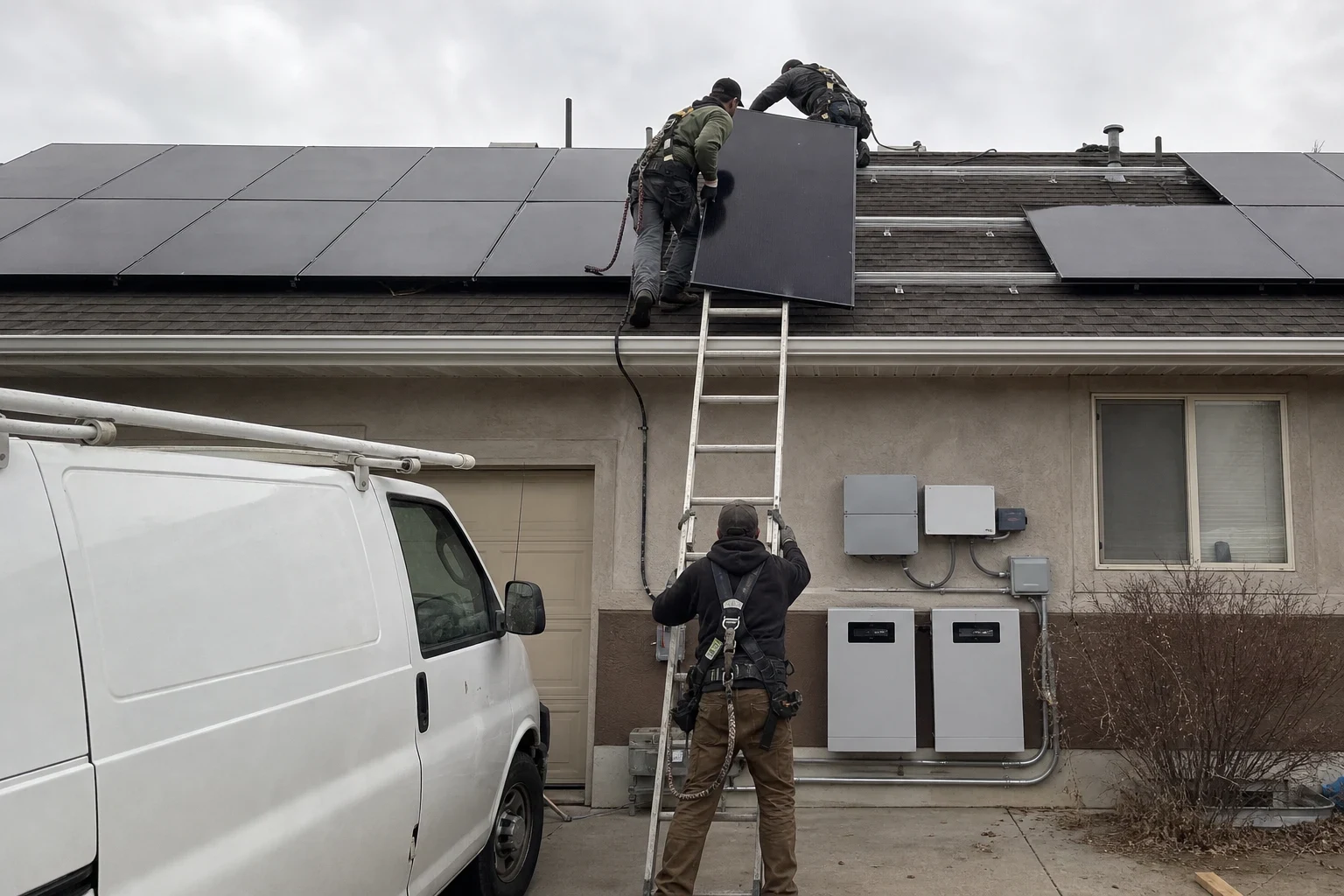
About Solar Installation Murray
We're a solar company working out of Murray, UT. We install panels and batteries on homes across the Salt Lake Valley, and we spend a good part of every job explaining what we're putting in and why.
That habit came from watching homeowners sign for systems they didn't understand. A panel's temperature rating matters on a hot July afternoon. A battery's chemistry affects how it handles a cold January garage. Once you know those things, you can pick the right gear and stop worrying about whether you got a good deal.
- License
- Licensed in all states served
- Warranty
- 25-year warranty on all solar and battery products
How a Solar Job Runs
From the first call to the day your system starts producing, here is what happens and who handles each part.
- 1
A phone call and your bills
You call, we ask about your home and what you want solar to do, and we look over a year of utility bills. If you'd like to see options on a screen, we can set up a free virtual appointment.
- 2
Design and material choices
We map out where the panels go, choose an inverter setup and size a battery if you want one. You get a written quote that lists each material and notes its trade-offs.
- 3
Permits and paperwork
We pull the building permit and file the interconnection application with the utility. This stage often runs longer than the install, and we let you know as each approval comes through.
- 4
Install day
Our crew sets the racking, mounts the panels, runs conduit and wires in the inverter and any battery. Most homes are finished in one to three days, depending on system size and storage.
- 5
Final checks and switching on
A city inspector reviews the finished work, then the utility signs off on the connection. Once both approvals are in, we power up the system and show you how to read your production numbers and what to keep an eye on.
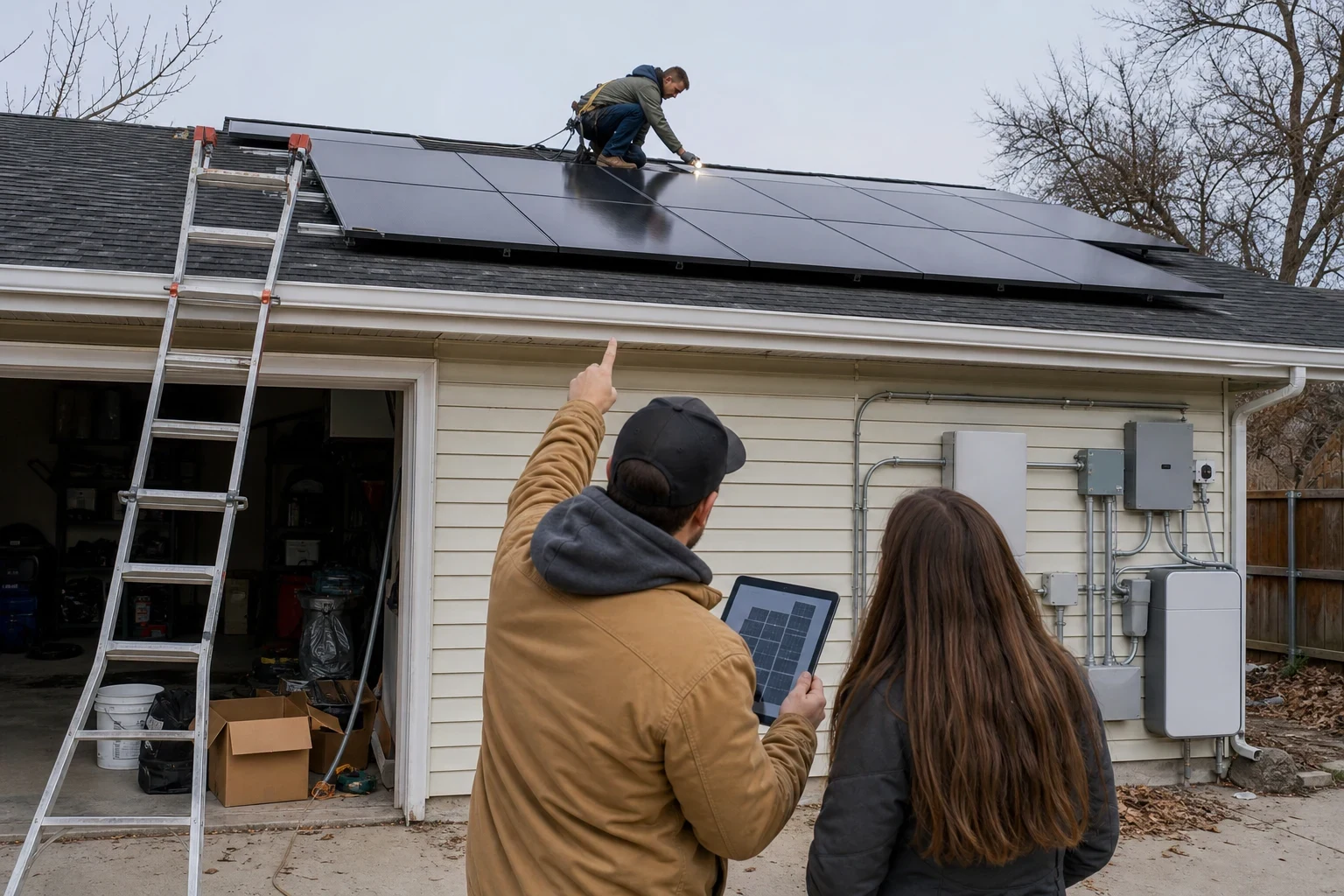
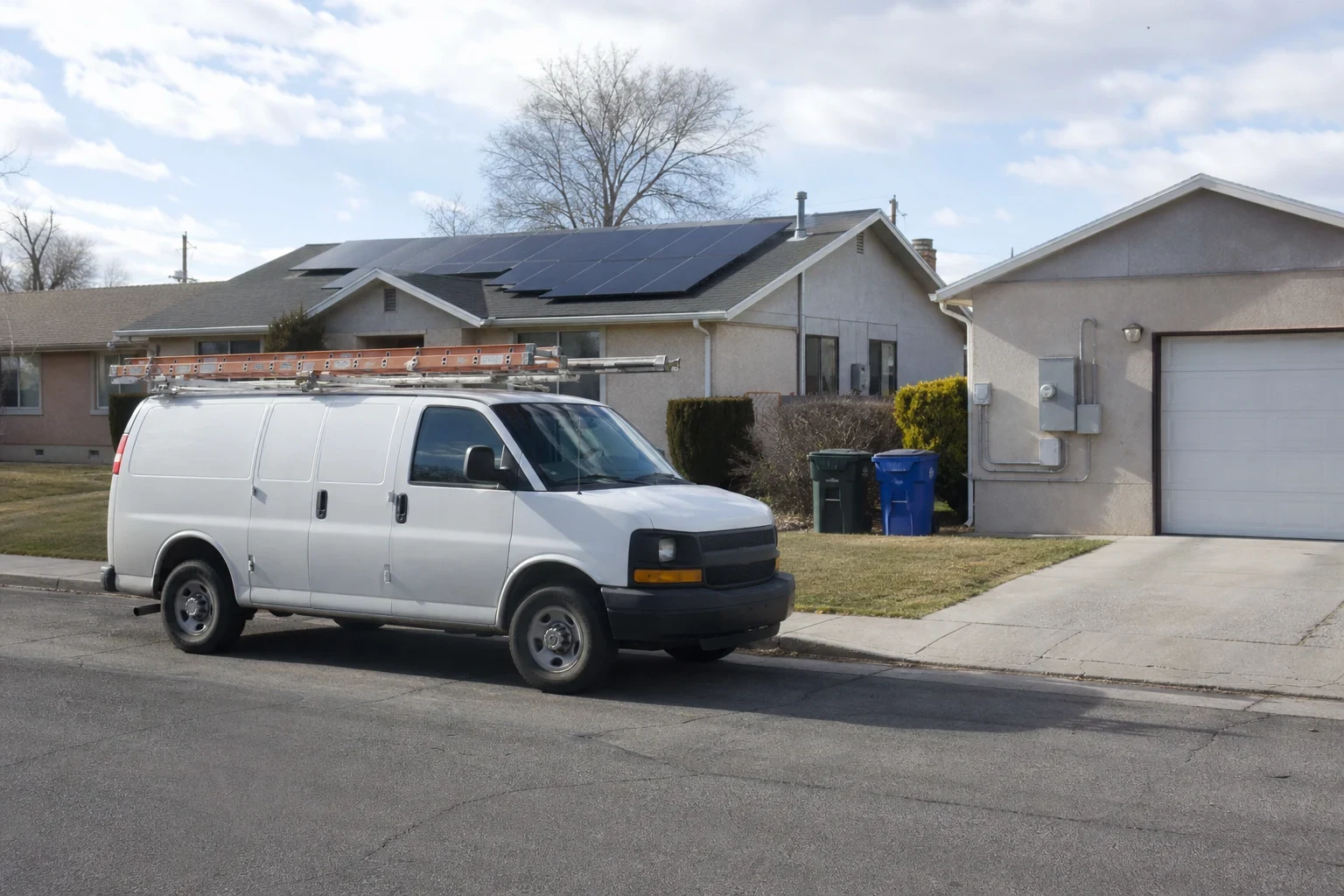
Why Homeowners Call Us
Solar is a big purchase with a lot of jargon. We cut that down to the parts that matter for your home and your power use.
- We explain the hardware
- Monocrystalline or polycrystalline. String inverter or microinverters. Lithium iron phosphate or another battery chemistry. We tell you what each does well, where it falls short, and which one we'd put on our own house.
- Sized to your actual usage
- We start from your past utility bills, not a stock package. A system that is too big costs you money you won't get back. One that is too small leaves savings on the table.
- A written quote, line by line
- Panels, inverters, racking, batteries, permits and labor each get their own line. You can see what you're paying for and ask about any piece of it.
- No pressure to add more
- If a battery doesn't make sense for how you use power, we'll say so. Same for extra panels or add-ons. You get our honest read and the choice stays yours.
- Clean, careful job days
- We keep wiring runs neat, label the equipment, and leave your yard the way we found it. Before we leave, we walk you through the monitoring app and the shutoff.
Questions We Hear Most
How much does solar cost for my home?
It depends on your power use, the panels and inverters you pick, and whether you add a battery. We put together a free quote from your real utility bills so the number fits your home. We also offer $0 up front, so you don't need a big check to get going.
What warranty comes with the system?
All solar and battery products carry a 25-year warranty. We walk through what that covers when we hand you the quote, so you know the details before you sign anything.
Should I pick monocrystalline or polycrystalline panels?
Monocrystalline panels are more efficient and hold up a little better in heat, which helps on long summer days. Polycrystalline panels cost less each but take more space for the same output. Most of our customers go with monocrystalline, but if space isn't tight, we'll price both so you can compare.
Do solar panels work in winter here?
Yes. Panels run more efficiently in cold air, and clear winter days still produce well. Snow cuts output until it slides or melts off, which usually takes a day or two on a tilted panel. The yearly production estimate we give you already counts the shorter winter days.
Is a battery worth adding?
For some homes, yes. A battery keeps key circuits running during an outage and lets you use your own daytime power at night instead of sending it to the grid for a smaller credit. If your goals don't call for one, we'll say so and quote the system without it.
How long does the whole process take?
The install itself usually takes one to three days. Permits, inspection and utility approval take longer and depend on the city and how backed up the utility is. We give you a realistic timeline at the start and update you as each step clears.
Do you have a referral program?
Yes. When someone you send our way goes solar, you earn $1,000, and there's no cap on how many people you can refer. Ask the person to give us your name on their first call so the credit lands with you.
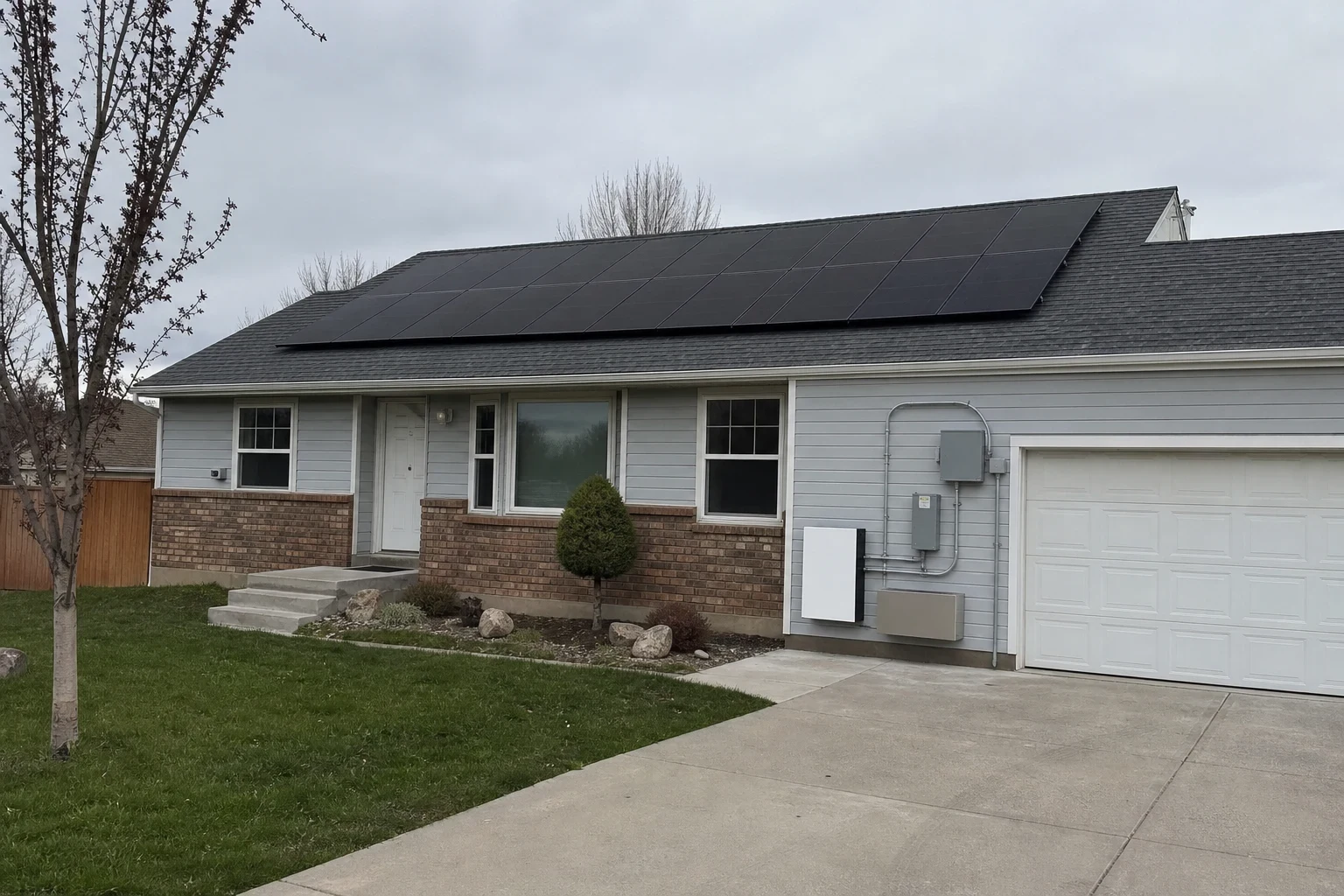
Find Out What Solar Looks Like for Your Home
Tell us about your home and your power bills, and we'll lay out panel, inverter and battery options with the trade-offs explained. No pressure and nothing to sign on the call.