ServicesSolar System Add-Ons
Solar System Add-Ons in Murray
Your power use changes. Maybe you bought an EV or swapped a gas furnace for a heat pump. We add panels, EV chargers and monitoring to the system on your home, and we pick parts that work with the inverter and wiring already there.
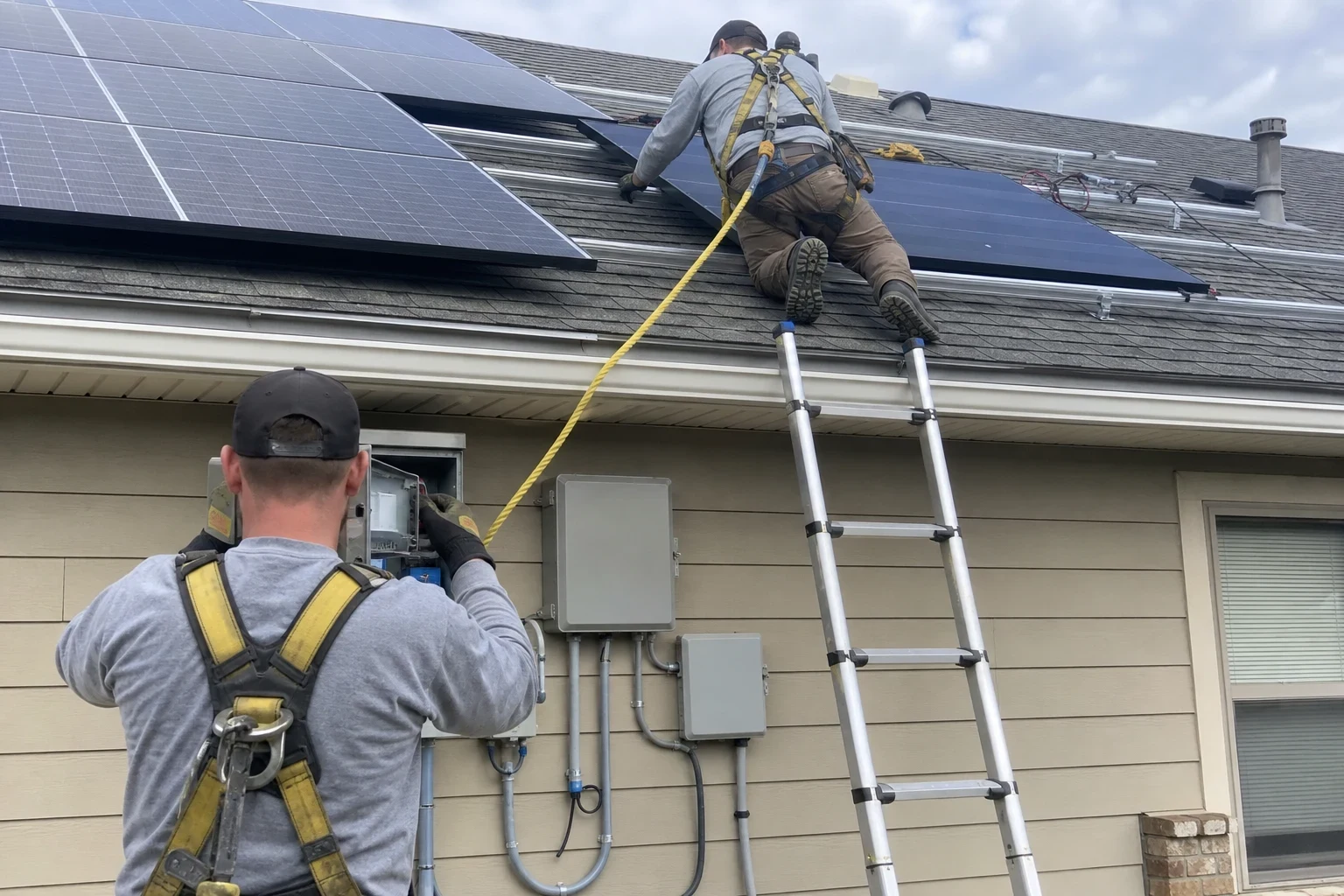
Adding to Solar You Already Own
An add-on is any work that grows or improves a solar system that is already running. Most of our add-on calls come from people whose bills crept back up after a new car, a new appliance or a growing family.
The hard part is not bolting on more hardware. It is making new parts play well with old ones. Panels have changed a lot in ten years. A newer panel can put out more voltage and current than your old inverter was built for, so we check the specs before we sell you anything.
If what you really need is a backup battery, see our Battery Storage page. If you are starting from scratch, Solar Panel Installation is the place to begin.
Add-Ons We Install
Extra panels
We add panels to cover new load. With microinverters, each new panel gets its own, which makes mixing old and new panels simple. With a string inverter, we check whether there is room left on the inverter or whether the new panels need their own.
EV chargers
We install hardwired Level 2 chargers and plug-in units on a NEMA 14-50 outlet. Hardwired chargers can run at higher amps and have no plug to wear out. Plug-in units are easier to take with you if you move.
Energy monitoring
Small current sensors clip around wires in your electrical panel and report what your home uses next to what your panels make. You see it on your phone and can tell right away if output drops.
Wiring and conduit
Outside runs go in metal EMT or gray PVC conduit, chosen for the spot. PVC shrugs off moisture. EMT holds up better where it can get knocked by a mower or a ladder. We size the wire for the full load, not just today's.
Electrical panel checks
Every add-on draws on your main panel. We look at breaker space and the main rating, and tell you plainly if an upgrade is needed before the add-on can go in.
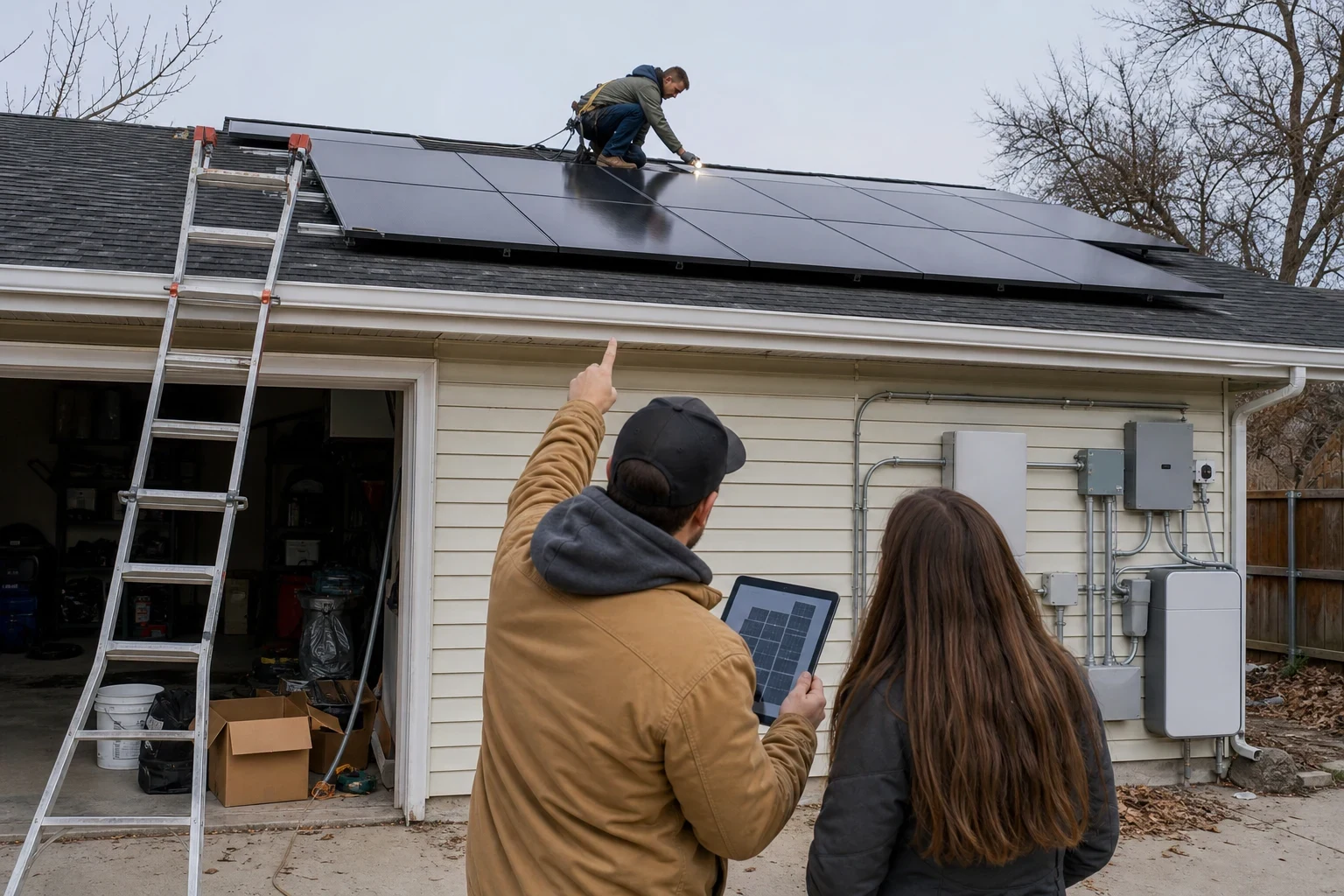
Signs Your System Needs an Add-On
- Your bill is climbing again
- Solar covered most of your use when it went in. Now you pay more each month and your rates have not changed much. Your load grew and your system did not.
- A new EV in the driveway
- Charging a car can add a big chunk to yearly use. A Level 2 charger plus a few more panels keeps that driving on sunshine.
- You are switching to electric heat or cooking
- Heat pumps, induction ranges and heat pump water heaters all shift load onto the meter. Winter heating in the valley adds up fast.
- You cannot tell what the system is doing
- If your only check is the monthly bill, you will not notice a weak spot until months later. Monitoring shows production day by day.
- No room in the breaker panel
- If your panel is full and you want a charger or more solar, plan the panel work along with the add-on so it is done once.
How an Add-On Job Goes
- 1
Start with a phone call
Tell us what changed at your home and what you hope to add. If it helps, we can set up a free virtual appointment and go over your recent bills and the labels on your current equipment together.
- 2
Look at what you already have
We read the specs on your inverter, panels and main electrical panel. Then you get a written estimate that lays out your options and the trade-offs of each part.
- 3
Handle the permit and paperwork
We pull the electrical permit and send the utility the forms it needs for added solar. You will not have to track down any of it yourself.
- 4
Install day
Most add-ons take one day of work outside your home, plus some time at the main panel. We shut the power off for a short stretch to make the connection, and we let you know before it happens. Wire scraps and boxes leave with us.
- 5
Sign-off and your first look
Once the inspector passes the work and the utility gives the go-ahead, we switch on the new parts. Before we leave, we sit down with you and your phone, open the app and show you what a good sunny day and a cloudy one look like on your system.
What Changes the Price
Add-on pricing depends on what you add and how well it fits what you already have. We put each part on its own line so you can see what drives the total. Ask us about $0 up front when you call.
- Inverter fit
- If your inverter has room, adding panels is simpler. If not, the new panels need their own inverter, which adds cost.
- Panel and charger choice
- Higher-output panels cost more each but you may need fewer. Hardwired chargers usually cost more to install than a plug-in unit.
- Distance and wire runs
- A long run from the array or garage to your main panel means more wire and conduit. Thicker wire for bigger loads costs more.
- Main panel upgrades
- A full or undersized panel may need work first. We tell you up front if that applies to your home.
Add-On Questions
- Can you add panels to a system another company installed?
- Often, yes. It comes down to your inverter type and how much room it has left. We check the model and specs before we quote, and if a match will not work well, we say so.
- Will new panels match my old ones?
- Probably not exactly, since models change every few years. With microinverters that rarely matters. With a string inverter we keep new and old panels on separate strings so the older ones do not hold back the new.
- Do add-ons come with a warranty?
- Yes. We give a 25-year warranty on all solar and battery products, and that includes the panels and parts we add to your system.
- Who does the electrical work?
- We do. We are licensed in all states served, and we pull the permit and set up the inspection for each add-on.
- Do I need a battery to add an EV charger?
- No. A charger works fine without one. A battery only matters if you want to charge or run the house during an outage, and our Battery Storage page covers that.
Tell Us What Changed at Home
Have your latest bill and a photo of your inverter label handy. We will walk you through which add-on fits and what it takes. Know someone else thinking about solar? Earn $1,000 for every referral that goes solar.