ServicesSolar Panel Installation
Solar Panel Installation in Murray, UT
We mount solar panels on your shingle or metal roof, sized to your power use. Before you sign, we show you the panels, the racking, the roof attachments and the inverter we plan to use, and why. You pick with the facts in front of you.
What We Install and Who It Fits
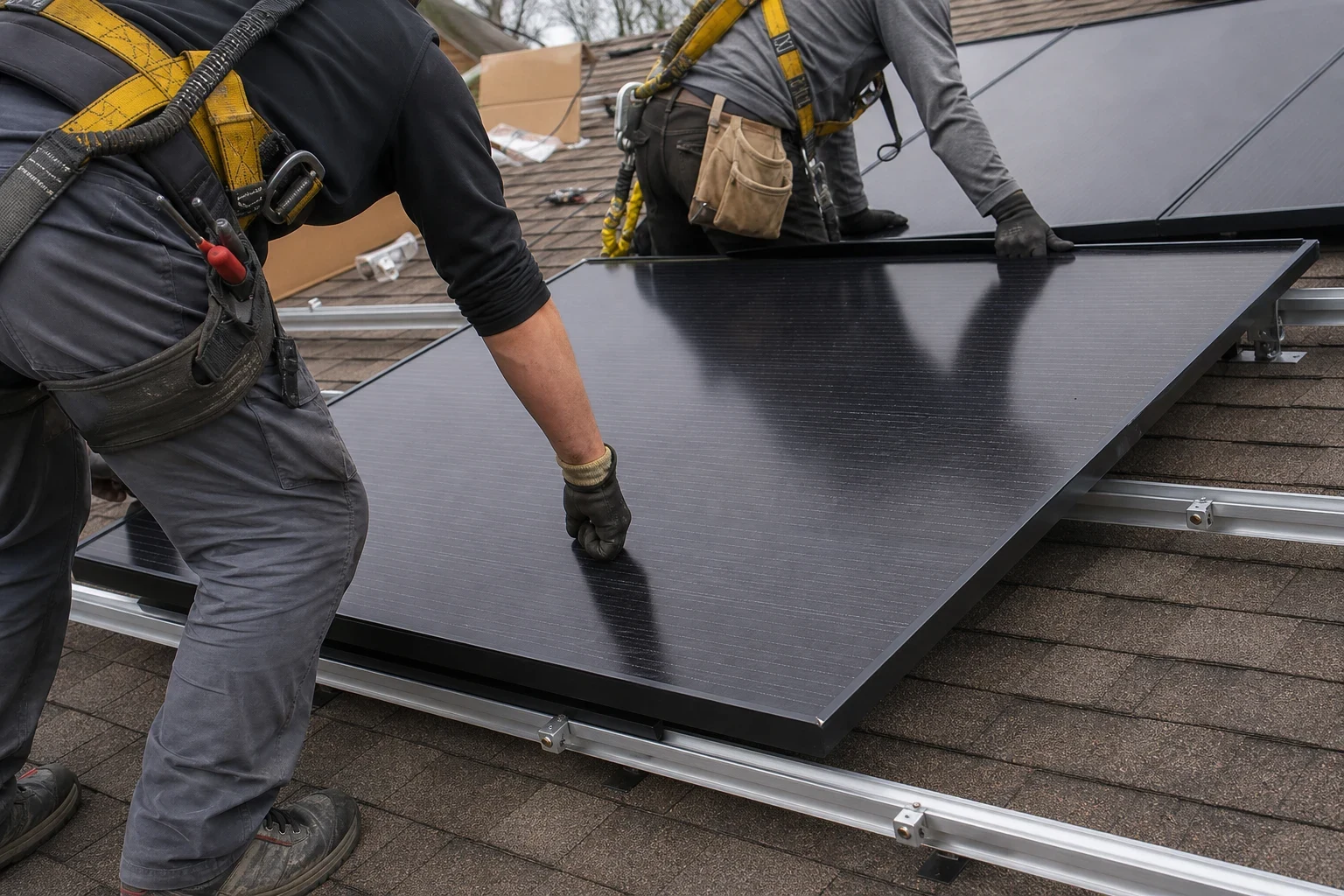
Our solar panel installation work is roof-mounted. The panels sit on low aluminum rails fastened to your roof with flashed attachments, on asphalt shingle or standing-seam metal. Nothing takes up yard space, and the array stays out of the way for years.
It's a good fit if your roof gets decent sun and has a few good years left in it. We check the roof first. If it's due for replacement soon, we tell you, since it's cheaper to reroof before the panels go on than after.
Every part of the system is a choice with trade-offs. We explain those choices up front, so the quote you get by phone isn't a mystery list of model numbers.
What the Job Includes
Panel selection
Most homes do well with monocrystalline panels. They make the most power per square foot, which counts when roof space is limited. All-black panels cost a little more but blend in with a dark roof. We tell you if the extra cost is worth it for your home.
Roof check
Before we design anything, we look at the age and condition of your shingles or metal panels, the decking and the rafters. If the roof can't carry the array for its full life, we say so before you spend a dollar.
Flashed attachments and racking
On shingles, each attachment is lagged into a rafter and sealed under flashing so water runs past it. On standing-seam metal, clamps grip the seams with no holes at all. Aluminum rails sit on top and hold the panels a few inches off the roof.
Layout around vents and shade
We lay out the panels around plumbing vents, chimneys and skylights, keep the setbacks fire code asks for, and leave out spots that trees or a neighbor's house shade for much of the day.
Inverter, conduit and connection
We set up a string inverter or microinverters, run conduit from the roof to your main panel, wire in the disconnects and tie the system in. Microinverters are the pricier pick, but each panel works on its own, so shade on one won't pull down the output of the others.
Permits and utility paperwork
We file for the permits, meet the inspector and send the interconnection request to your utility. You don't have to chase any of it.
Signs Rooftop Solar Makes Sense
Your roof gets good sun
A roof plane facing south, east or west with little shade from trees or nearby houses can carry a productive array.
Your roof has years left in it
Panels are best installed on a roof that won't need replacing soon. A newer shingle or metal roof is an ideal base.
Your power bills keep climbing
Air conditioning in summer and longer evenings in winter add up. If your bills have crept up year after year, it's worth seeing what an array could offset.
You'd rather keep your yard open
Roof-mounted panels use space you already have overhead, so the yard stays free for everything else.
You have a metal roof
Standing-seam metal takes clamps right on the seams, with no holes in the roof. It's one of the simplest roofs to put solar on.
How the Work Goes
- 1
Phone call and savings look
You call, we talk about your bills and your roof, and we can do a free virtual appointment to look at the site. You get a free quote that lists each part by name.
- 2
Site visit and design
We check the roof's condition, pitch, sun and shade, and find the rafters. Then we draw the layout around vents and setbacks and plan the conduit run to your main panel.
- 3
Permits and approval
We file the permits and the utility application. Nothing goes on the roof until the paperwork clears.
- 4
Build days
Attachments and flashing go in first, then the rails, then the panels and wiring. Most homes are done in a day or two, and we clean up the yard and driveway before we leave.
- 5
Inspection and turn-on
The inspector signs off, the utility gives permission, and we turn the system on. We walk you through the monitoring so you can see what it makes each day.
What Moves the Price
No two roofs cost the same. The size of the system matters most, but the roof type and the distance to your electrical panel matter too. We show every line on the quote, and there's a $0 up front option.
- System size
- The count of panels drives the total, since each one adds hardware and labor. We build the array around what your home actually uses, not around how many panels the roof could hold.
- Panel and inverter choice
- All-black panels and microinverters cost more than standard panels and a string inverter. Sometimes they pay off, sometimes they don't.
- Roof type and pitch
- Standing-seam metal with seam clamps is quick to work on. Steep pitches, several roof planes or lots of vents to work around take more time and safety gear.
- Conduit run
- The farther the array sits from your electrical panel, the longer the conduit and wire run. Routing through an attic or around the house adds work.
- Panel upgrades
- Older electrical panels sometimes need an upgrade to take a solar tie-in. We check this early so it isn't a surprise.
Solar Panel Installation Questions
Something not covered here? (801) 515-8254
How much roof space does a system need?
It depends on how much power you use. A typical home system fits on one or two sunny roof planes. We measure your roof and tell you what fits.
How do the panels handle snow?
Panels sit at the pitch of your roof, so snow slides off once the sun warms the glass. The racking and attachments are rated for winter snow load in the valley, and every roof penetration is flashed to keep melt water out.
Who handles the permits and inspection?
We do. We're licensed in all states served, and we pull the building and electrical permits for every install. We're on site when the inspector comes out.
What warranty comes with the system?
You get a 25-year warranty, and it applies to every solar and battery product in your system, from the panels to the inverter. When we go over your quote, we spell out what that coverage includes.
Will the system work with a battery down the road?
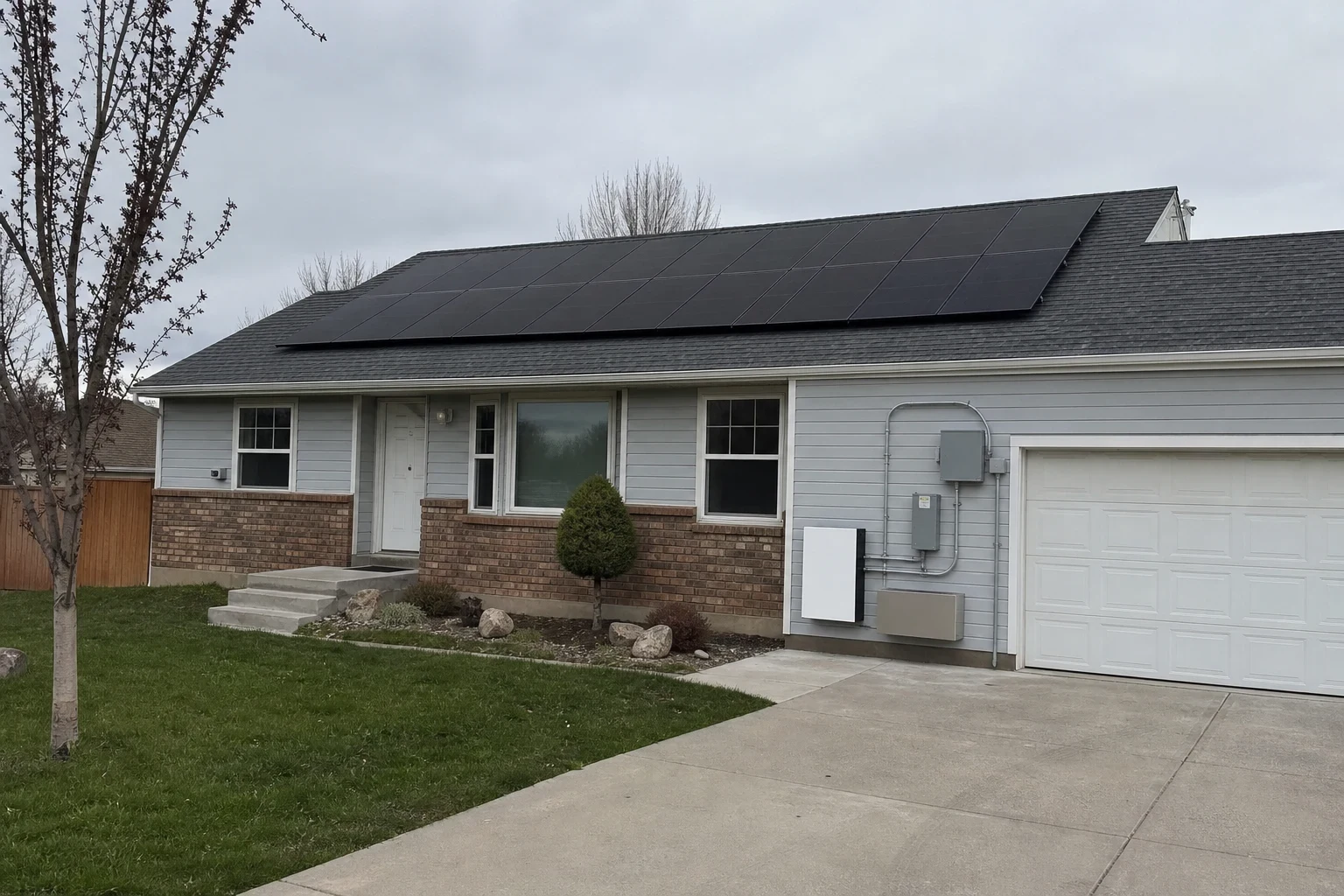
It can. If you think you'll want battery storage later, tell us on the call. We'll leave room in the wiring and inverter setup so a battery is a simple addition instead of a rework.
Do you serve towns besides Murray?
We do. We work in Sandy, Midvale, Holladay, Taylorsville and other nearby towns. Our Service Areas page lists them.
Find Out What Your Roof Can Do
Tell us about your bills and your roof. We'll go over the panel, racking and inverter options and what each one would cost you.