ServicesSolar Panel Repair
Solar Panel Repair in Murray
When your system makes less power than it should, something specific has failed. We find the part, show you what it is made of and why it broke, and explain what a repair takes. Then you decide.
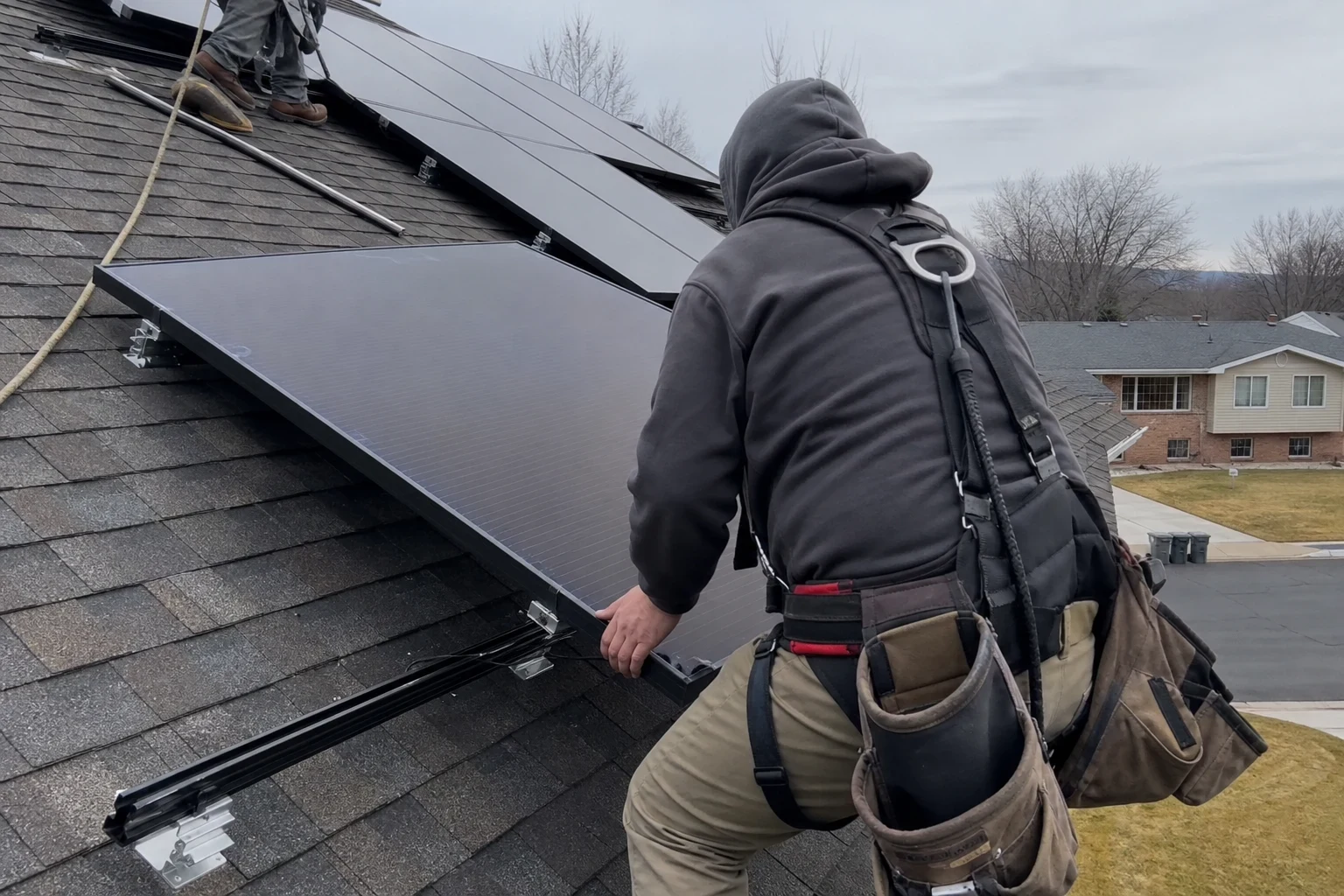
What a Panel Repair Actually Fixes
A solar array is a stack of materials that age at different rates. Tempered glass, an aluminum frame, a plastic backsheet, copper wiring, plastic connectors and an inverter full of electronics. Usually one of those wears out long before the rest. Our job is to find which one.
Around Murray, the hard part is the swing. Hot, high-UV summers bake plastics and seals. Winter freeze and thaw works on anything with a small gap. A connector or a stretch of cable that looked fine in year three can be the weak link by year ten.
Fixing the one failed part is often all it takes. If it isn't, we tell you that too, and explain where solar panel installation of new equipment makes more sense than chasing repairs.
What We Check and Repair
Panel glass and frames
Cracked tempered glass lets moisture reach the cells. We look for cracks, chips and bent aluminum frames and tell you whether the panel can stay in service.
Backsheet and delamination
The plastic layer on the back of a panel can yellow, crack or peel after years of sun. Once layers separate, water gets in and output drops. We check for it panel by panel.
Connectors and wiring
Plastic connectors loosen, corrode or melt at a bad joint. Cable insulation gets brittle or chewed by animals. We test each string and replace worn connectors and damaged runs with matched parts.
Inverter faults
The inverter turns panel power into power your home can use, and it is the part most likely to quit first. We read its error codes, test it and tell you whether it needs a repair or a replacement.
Mounting hardware
Bolts, clamps and rails can loosen with wind and temperature swings. We tighten or replace hardware so panels sit square and secure.
What Tells You a Repair Is Due
Higher bills, same habits
Your home uses about what it always has, yet the utility bill keeps climbing. That usually means the panels are producing less. Better to check it now than after output slides further.
A dip in the monitoring app
Line up this month against the same month a year ago. A slow, steady decline, or one string reading well below the rest, points to a specific fault we can track down.
Red or amber inverter light
A colored status light or a fault number on the display means the inverter has spotted a problem. Write that number down before you pick up the phone. It speeds things up.
Damage you can see on a panel
Look for cracked glass, brown patches, bubbles or a back layer that is peeling away. Each one lets moisture reach the cells. Hail and heavy snow cause a lot of it.
Wires hanging loose or bitten
Loose wiring or bite marks under the array put safety at risk, not just output. Keep kids and pets away from that spot and give us a call.
From First Call to a Working System
- 1
Describe the problem by phone
Let us know what the app, the bill or the panels are showing you. Often we can start with a free virtual appointment, going over your monitoring data and photos before we send anyone out.
- 2
On-site testing
We shut the system down safely, then test strings, connectors and the inverter. We take photos of anything that has failed so you can see it yourself.
- 3
A plain answer and a quote
We explain which part failed, what it is made of and why it broke. You get a written quote that lists the parts and labor before any work starts.
- 4
Repair and restart
We replace the failed parts, bring the system back online and confirm it is producing again. Packaging and old parts leave with us.
What Sets the Cost of the Fix
The price depends mostly on what broke and how easy it is to get to. We don't put a number on it until we've tested the system and know the cause. After that, you get a written quote with each part and the labor listed out.
- Which part failed
- A worn connector is a small job. A panel or an inverter costs more because the part itself costs more.
- Matching older equipment
- Older panels can be hard to match in size and output. Sometimes a close match works fine. Sometimes it means swapping more than one panel.
- Access to the array
- Panels that are easy to reach take less time. Tight spots or a layout that needs other panels moved first add labor.
- Hidden damage
- Water that got in through cracked glass or a bad connector can damage nearby wiring. We show you anything extra we find and quote it before touching it.
Solar Panel Repair Questions
Something not covered here? (801) 515-8254
Is it worth repairing an older system?
Often, yes. A failed inverter or a few bad connectors can be replaced and the rest of the system keeps working for years. If several panels are breaking down at once, we'll tell you a new system may cost less over time than repeated repairs.
Will you work on a system another company installed?
We can look at it. We test the system the same way no matter who put it in. If parts are no longer made, we'll explain your options before quoting anything.
Are your repairs covered by a warranty?
The solar and battery products we supply come with a 25-year warranty. When we install a new part, we'll tell you exactly what that covers on your job.
Who does the electrical work on my system?
Our own crew does. We hold licenses in all states served. Panels, wiring and inverters carry live current even on a cloudy day, so this is work for trained hands, not a ladder and a guess.
Can I keep using the system until you come out?
If there is damaged wiring, scorch marks or a burning smell, shut it off at the disconnect and leave it off. For a simple drop in output, it's usually fine to keep running. Ask us when you call and we'll tell you which applies.
Find Out What Failed and What It Takes
Call us with what you're seeing. We'll set up a free virtual appointment or a visit and give you a straight answer on the repair.