ServicesBattery Storage
Battery Storage in Murray
Your panels make the most power around midday. A home battery saves it for the evening and keeps chosen circuits on when the grid fails. We lay out the battery types in plain terms, size the unit to how your home really uses power and install it on a set day.
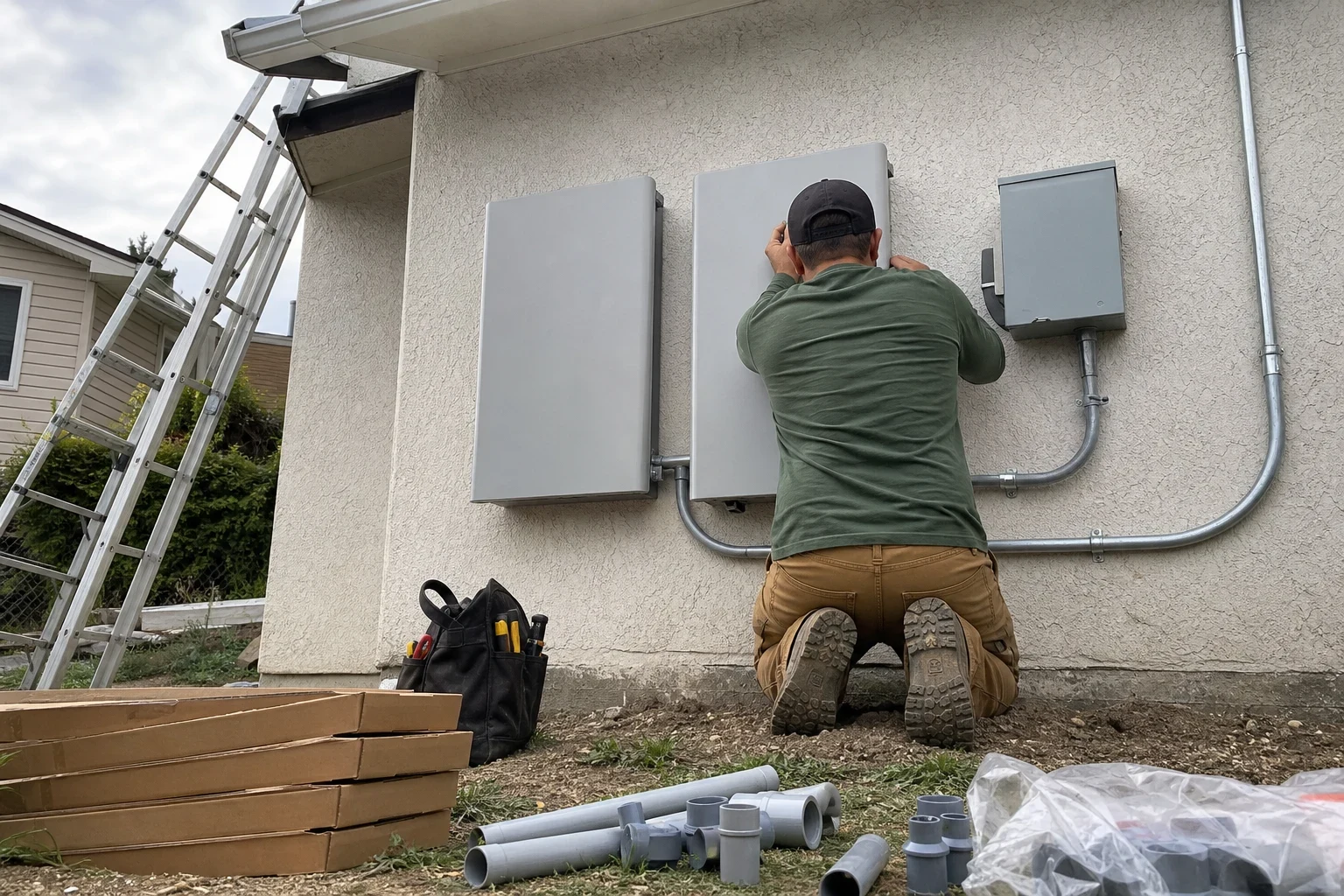
Why Homeowners Add a Battery
Most solar power gets made between late morning and mid-afternoon, while a lot of people are out of the house. With no battery, that surplus flows out to the grid. If your utility pays less for what you export than it charges for what you buy after dark, you lose on that swap. A battery holds the surplus at your home for evening use.
Its other job is keeping the lights on. When the grid drops, the battery and its gateway or transfer switch cut your home off from the utility lines and power the circuits you picked. Most people choose the fridge, lights, furnace blower, internet and a handful of outlets.
Batteries differ in what is inside them, and that counts when your garage sits below freezing in January. Before you sign anything, we cover the chemistry, the storage size and the mounting spot with you.
What Comes With Every Battery Job
Plain talk on battery chemistry
Lithium iron phosphate, or LFP, is what most home batteries use now. It stays cooler, shrugs off heat and lasts through thousands of cycles, but it weighs more per kilowatt-hour. Nickel manganese cobalt fits more storage in a smaller cabinet. We put both side by side and tell you which one suits your wall space and budget.
Sized to your bills, not a guess
We read through a year of power bills and ask what has to stay on during an outage. That gives us the kilowatt-hours you need. Square footage alone does not.
Placement that handles winter
Lithium cells will not charge safely below freezing. We use heated models or pick a warmer wall, such as one in an attached garage, and keep the unit out of snow and away from bumpers.
Backup wiring to code
Depending on the setup, that is a gateway or automatic transfer switch, plus a backup subpanel if only some circuits go on battery. We label every connection so any future electrician can read it at a glance.
Permit and utility filings
We file the permit, book the city inspector and send the interconnection forms to your utility ourselves. Nothing lands on your to-do list.
Long coverage on the battery
The battery falls under our 25-year warranty on all solar and battery products.
When a Home Battery Is Worth a Look
- Outages have cost you before
- Windstorms and winter weather can cut power for hours. If you have tossed spoiled food or waited it out in a chilly house, backup deserves a closer look.
- Export credits look thin on your bill
- Lots of power going out to the grid for a small credit is a sign. Keeping it for evening use usually gets more out of your panels.
- Some equipment has to stay on
- Medical devices, a sump pump or a work-from-home setup are solid reasons to keep a few circuits on battery.
- Solar is already in your plans
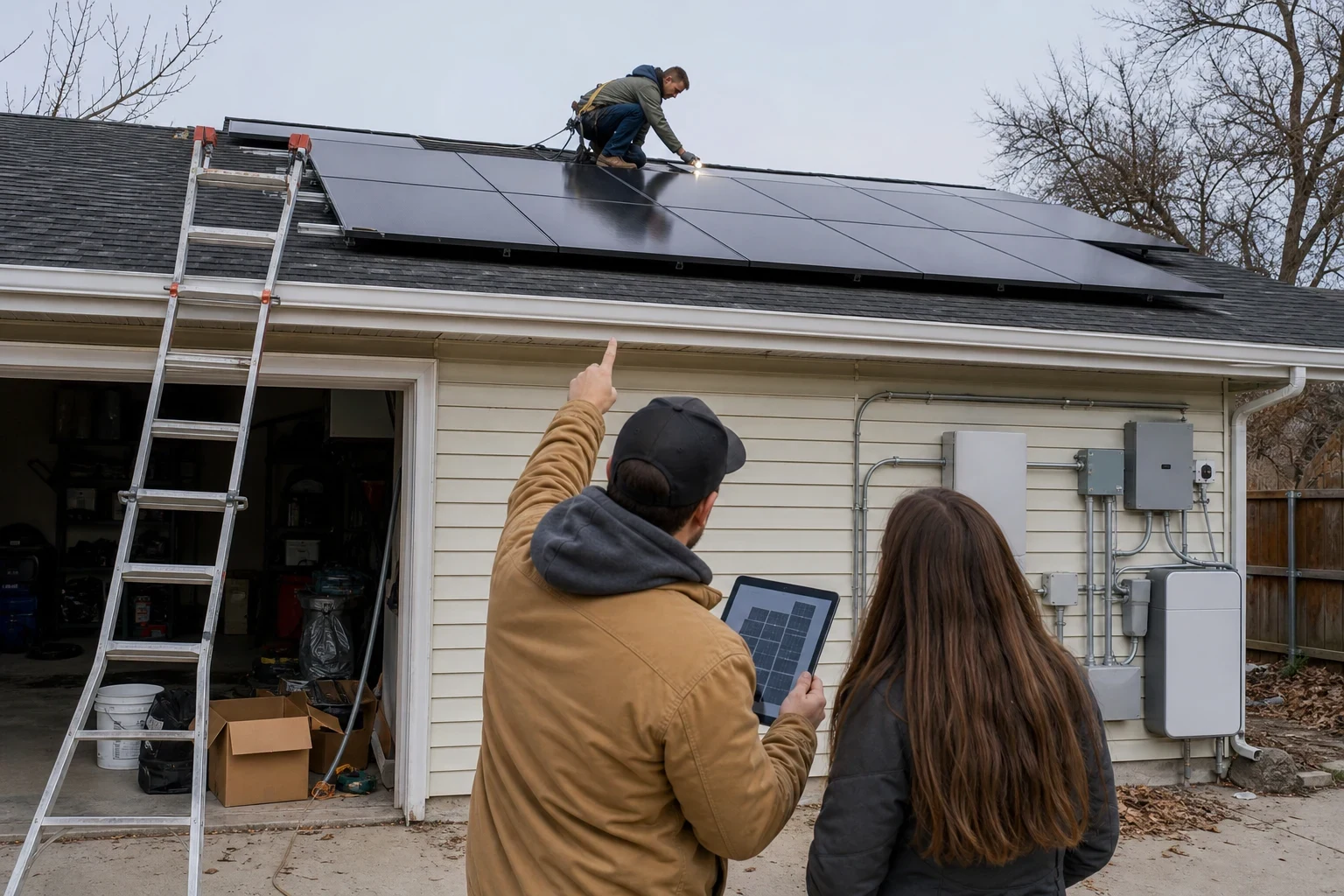
- Pairing the battery with a new solar panel installation means a single permit, a single inspection and one crew trip.
- Your heavy use comes after sunset
- Dinner, laundry and evening AC all run once the panels slow down. Stored power covers those hours with energy your home already made.
Our Battery Install, Step by Step
- 1
Start with a call
Phone us and we set up a free virtual appointment. We go over your bills and photos of your electrical panel, and talk about which circuits you want backed up.
- 2
Design and line-item quote
We settle on chemistry, size and where it mounts, then go over a quote broken out line by line. Any main panel work the battery needs is listed right there, up front.
- 3
Permit and utility approval
We file the permit with the city and handle the utility's interconnection paperwork ourselves. This part usually takes the longest, and we call you with updates as it moves along.
- 4
The install
Most jobs wrap up in one day. We hang the battery, run conduit to your panel and wire the gateway and any backup subpanel. Your power is off for a few hours during the tie-in, and we clean up before heading out.
- 5
Final check and handoff
Once the city inspector approves the work and the utility gives the go-ahead, we power everything up. Then we run a test outage with you and walk you through the app.
What Moves the Price of a Battery
Battery pricing comes down to how much you store and how much wiring it takes to get it working with your home. We price it line by line so you can see each piece. Ask us about $0 up front when you call.
- Storage size
- More kilowatt-hours cost more. Backing up a few circuits needs far less storage than running the whole house, AC included.
- Battery chemistry and brand
- LFP and NMC units are priced differently, and so are brands with built-in heaters or larger inverters.
- Electrical panel condition
- Older or full panels may need an upgrade or a backup subpanel. We check this up front.
- Mounting spot and wire run
- A garage wall right next to your main panel is the simplest job. A longer conduit run or an outdoor enclosure adds labor and material.
Common Questions About Home Batteries
- How long will a battery keep my home running when the grid is down?
- It depends on two things: how much the battery stores and what you ask it to power. A fridge, lights, Wi-Fi and the furnace fan use far less than central AC or an electric range. If your panels recharge the battery every day, even a smaller unit can keep the basics going through a long outage. We add up your real loads before you decide on anything.
- My solar is already up. Can a battery be added now?
- In most cases, yes. We check your existing inverter and main panel to see whether the battery can tie in directly or needs its own inverter. We tell you which setup it is before we price the job.
- Will a battery work in a garage that gets below freezing?
- Yes, as long as the unit and the spot are chosen with cold in mind. Lithium cells should not charge below freezing, so we pick models with a built-in heater or mount them somewhere that stays milder. Drawing power out in the cold is fine, so your home still runs.
- What warranty comes with the battery?
- Every solar and battery product we install carries a 25-year warranty. Your quote lays out what that covers, so you know the terms well before install day.
- Who does the electrical work?
- Our own crew handles the wiring, and we are licensed in all states served. Each battery job is permitted and inspected by the city, and we line up both for you.
- Is a battery worth it if outages are rare where I live?
- It can be, because backup is only part of the reason to own one. If your panels push a lot of power to the grid for a small credit, storing it for the evening means buying less back. If neither reason fits your home, we will tell you plainly that a battery may not pay off for you.
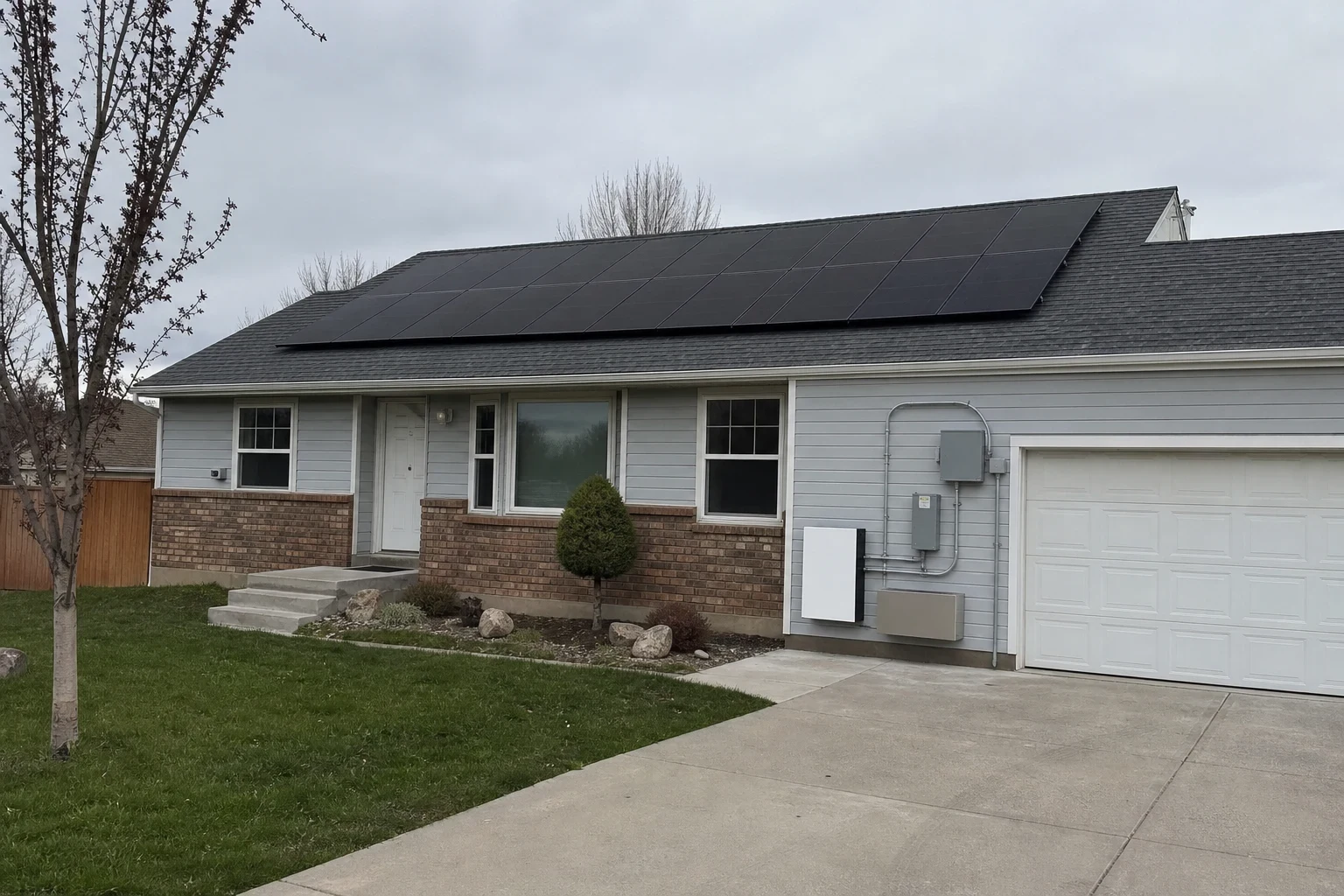
Find Out Which Battery Fits Your Home
We will look at your usage, explain the battery types and give you a clear number. It takes one phone call to start.